iPhone 18 Pro details exposed in Tata Electronics breach
The Breach
Response and Fallout
Wider Implications
Freakonomics Rev Ed
Freakonomics arrived in 2005 as a Trojan horse.

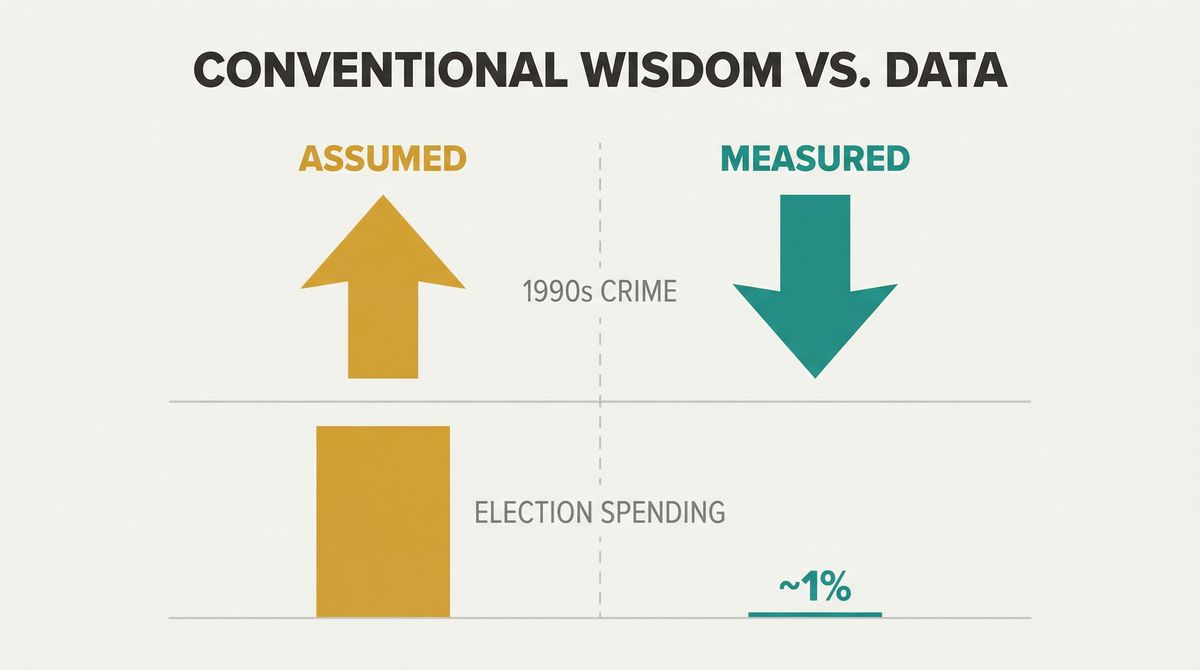
Packaged as pop entertainment — sumo scandals, crack dealers' budgets — it smuggled in a genuinely radical epistemological argument: that most expert knowledge about social phenomena is really conventional wisdom laundered through credentials and media repetition. The book's deepest contribution isn't any single finding; it's the demonstration that a handful of analytical principles — follow incentives, distinguish correlation from causation, exploit natural experiments — can overturn decades of received wisdom.
The book essentially invented a genre. Before Freakonomics, the idea that an economist might study sumo wrestling or baby names was considered trivial. Levitt's work helped legitimize an empirical, question-driven approach to social science that prioritized clever identification strategies over grand theory. This 'credibility revolution' in economics has since transformed the discipline, with natural experiments now considered the gold standard.
The book has aged unevenly.
The abortion-crime thesis remains hotly debated — subsequent scholars have both supported and challenged the findings, and the authors themselves had to correct an error identified by Foote and Goetz while arguing their corrected results still held. The real estate agent study anticipated the broader collapse of trust in expert intermediaries that platforms like Zillow would accelerate. The parenting chapter's emphasis on 'who you are' over 'what you do' presaged the behavioral genetics revolution that has only strengthened the case for genetic influence.
What's most striking in retrospect is the book's studied amorality — its insistence that economics describes how the world works without prescribing how it should. This gives intellectual freedom but sometimes reads as evasion. The abortion-crime chapter carefully avoids policy recommendations, leaving readers with a powerful statistical relationship and no guidance on what to do with it. That tension — between the power of data to reveal uncomfortable truths and the inadequacy of data alone to resolve moral questions — remains the book's most productive provocation.
The Art of War Landmark Edition
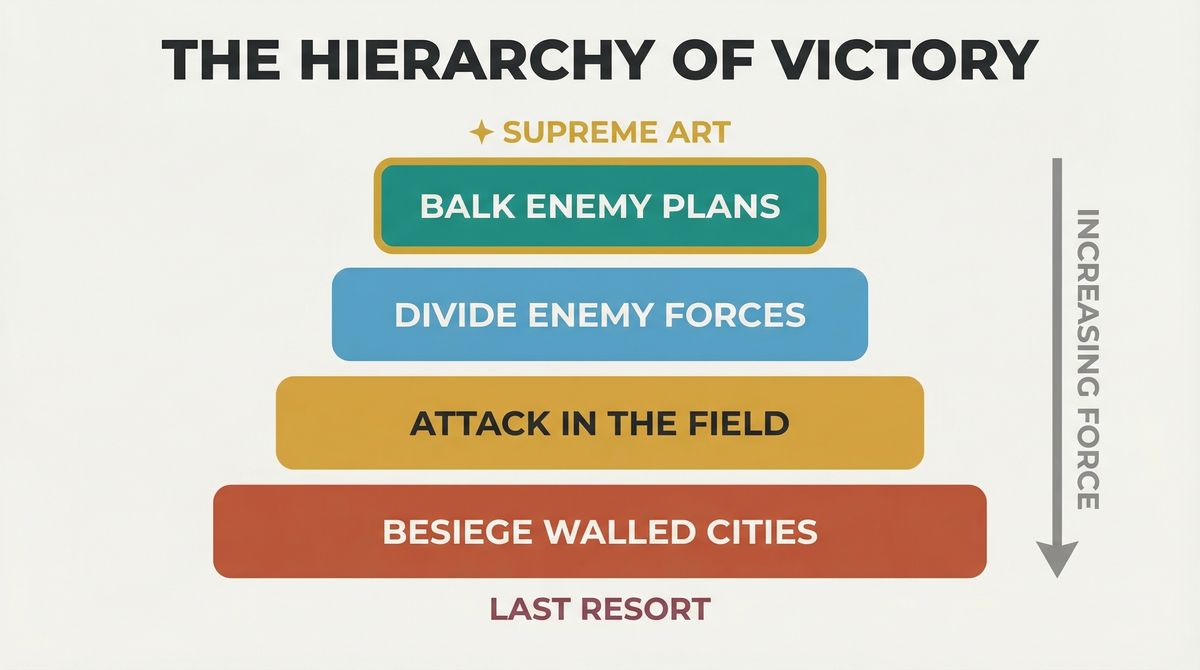
The Art of War endures not because it teaches how to fight, but because it teaches when not to.

Written roughly 2,500 years ago and attributed to the semi-mythical Chinese general Sun Tzu, this slim treatise operates on a paradox that still startles: the supreme warrior is the one who never draws his sword. Its continued relevance across military academies, corporate boardrooms, and coaching staffs stems from a Taoist philosophical foundation that Western strategic thinkers largely missed. Where Clausewitz — the Prussian theorist who dominated European military thought — normalized war as 'politics by other means' and advocated pursuing it to absolute ends, Sun Tzu treated war as a catastrophic last resort whose aim was the swift restoration of normalcy. British military historian B.H. Liddell Hart argued in 1963 that civilization could have been 'spared much of the damage suffered in the world wars' had Clausewitz's influence been tempered by Sun Tzu's realism and moderation.
What makes the text remarkable is its fractal applicability.
The core principles — deception, intelligence, adaptability, restraint — scale cleanly from geopolitics to salary negotiations to parenting disputes. The water metaphor alone contains a complete strategic philosophy: be formless, find the path of least resistance, and when the moment arrives, be irresistible. This is not brute-force thinking; it is systems thinking rooted in ecological observation of how nature actually resolves conflict.
The Landmark Edition's pairing with the Tao Te Ching illuminates something routinely missed in popular readings: Sun Tzu's tactical genius is downstream of Lao Tzu's metaphysics. The insistence on softness overcoming hardness, on the power of emptiness, on the lethal danger of rigidity — these are not incidental themes. They are the operating system on which every specific tactic runs. Readers who absorb only the tactical surface without grasping the Taoist architecture beneath it will possess the letter of the teaching but miss its animating spirit — precisely the error Sun Tzu warns his generals against making.
Elon Musk
Ashlee Vance's biography accomplishes something rare in business nonfiction

it presents a subject who is simultaneously admirable and disturbing without resolving the tension. Vance doesn't redeem Musk or condemn him. He shows you the man who paid for an employee's Lasik surgery on impulse and the man who fired his twelve-year executive assistant without ceremony. The reader is left to adjudicate.
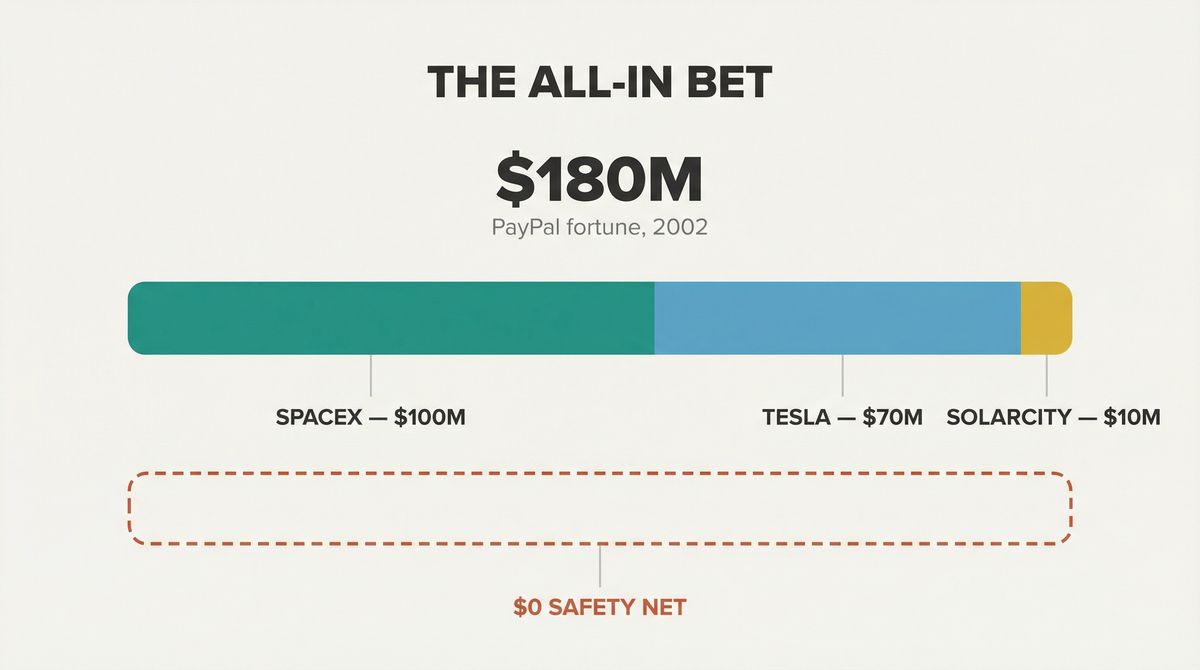
The book's enduring intellectual contribution is its documentation of a managerial archetype the MBA curriculum cannot produce. Musk combines the depth of a specialist with the breadth of a generalist — knowing enough about rocket propulsion to correct an engineer's quantum mechanics equation while simultaneously negotiating NASA contracts and redesigning car door handles. This polymathic intensity isn't merely biographical curiosity; it's a competitive moat. Competitors who separate 'the business guys' from 'the engineering guys' cannot iterate at Musk's speed.
What distinguishes Vance's account from typical Silicon Valley hagiography is his treatment of the human cost.
The book catalogs destroyed marriages, engineers who burned out at thirty, and a corporate culture where being told 'you're off the project' is the mildest feedback. Vance traces this directly to Musk's traumatic childhood — the bullying, the psychological abuse, the isolation — creating an implicit argument that extreme achievement and extreme dysfunction may share the same root system.
The book's notable limitation is its 2015 publication date, capturing Musk at peak credibility before the Twitter acquisition, Model 3 production hell, and increasingly polarizing public persona. In retrospect, it reads as the high-water mark of the 'visionary Elon' narrative. Yet the core business insights endure: vertical integration beats outsourcing in complex hardware, first-principles thinking defeats convention, and a sufficiently compelling mission can extract superhuman effort from ordinary people — at least until they break.
Zero to One

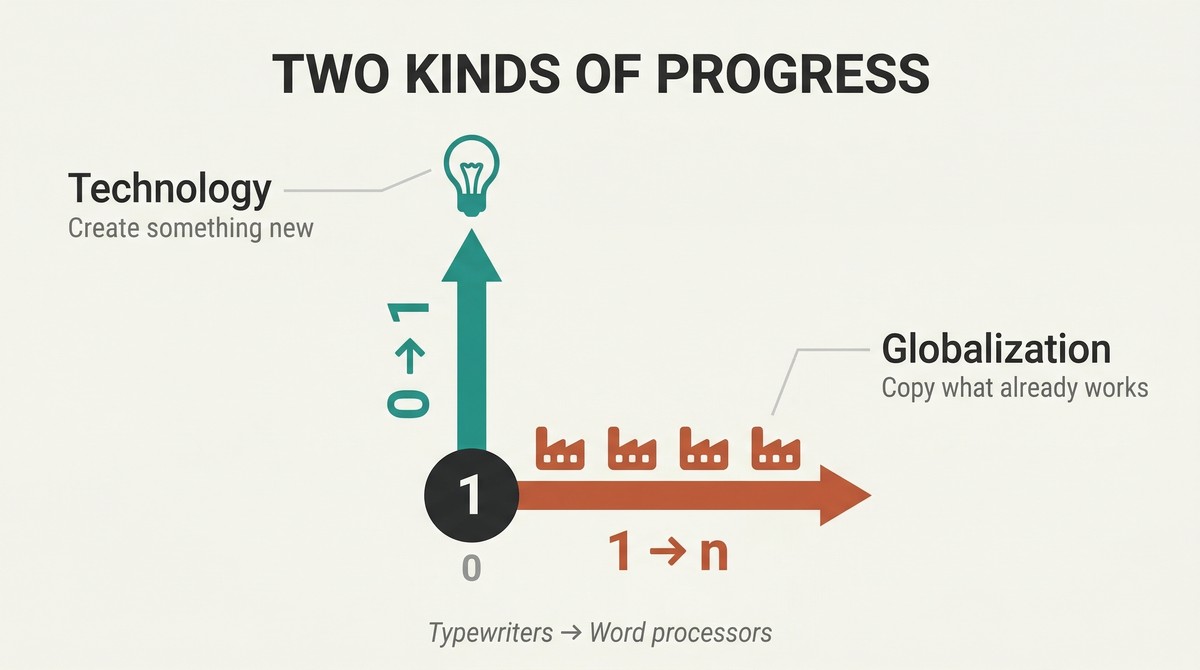
Zero to One is part manifesto, part anti-textbook.
It deliberately subverts conventional MBA wisdom at nearly every turn — monopoly over competition, planning over iteration, boldness over incrementalism. The book's intellectual DNA draws from Schumpeterian creative destruction (capitalism progresses through monopolies that displace incumbents), René Girard's mimetic theory (which informs Thiel's view of competition as unconscious imitation between similar rivals), and a strain of libertarian futurism that distrusts both bureaucratic regulation and crowd consensus.
What makes the book enduringly provocative is its willingness to state uncomfortable positions as simple truths. Thiel doesn't hedge when he calls competition destructive or declares capitalism and competition opposites. This rhetorical strategy — framing contrarian positions as overlooked common sense — is itself a masterclass in the hidden salesmanship the book describes.
The most underappreciated tension in Zero to One is between its determinism and its humility. Thiel argues forcefully for definite planning, yet acknowledges that 'no authority can prescribe in concrete terms how to be innovative.' The seven questions framework gives structure without guaranteeing outcomes. This is philosophically honest: the book offers lenses for thinking, not recipes for cooking.
The book's blindspots deserve mention.
Thiel's monopoly argument works elegantly for software companies with near-zero marginal costs but applies less neatly to industries with physical constraints. His survivorship bias is acute: we hear about PayPal's boldness but not the equally bold companies that crashed alongside Pets.com. The cleantech chapter, while brilliant as strategic analysis, may overstate how predictable those failures were in real time.
Still, Zero to One's lasting contribution is cultural more than tactical. It gave Silicon Valley an intellectual framework for ambition at a time when post-crash timidity had become orthodoxy. Its central provocation — that creating something genuinely new is both harder and more important than optimizing what exists — remains the most productive question any entrepreneur can sit with, even a decade after publication.
The 48 Laws of Power
Robert Greene's The 48 Laws of Power holds a rare position in modern nonfiction

part history book, part strategy manual, part philosophical provocation. Drawing from three millennia of examples — Sun-tzu to Bismarck, Medici bankers to Mao's guerrillas — Greene distills what he sees as the unchanging mechanics of human power dynamics. The result is less a prescriptive playbook than a diagnostic toolkit for reading the hidden architecture beneath every social interaction.
What makes the book endure is its radical amorality. Unlike most self-help works, which start with ethics and work backward, Greene begins with raw observation. He asks not 'What should people do?' but 'What actually works?' This places him in the Machiavellian tradition, and like Machiavelli, he has been celebrated and condemned for articulating what most people practice in silence.
Greene's most subversive claim is his opening argument
that those who loudly reject power games are often the most skilled players. The person who advertises moral purity is deploying concealment; the radical egalitarian redistributes power on their own terms. This Nietzschean suspicion of virtue as a mask for will-to-power is the philosophical engine driving all 48 laws.
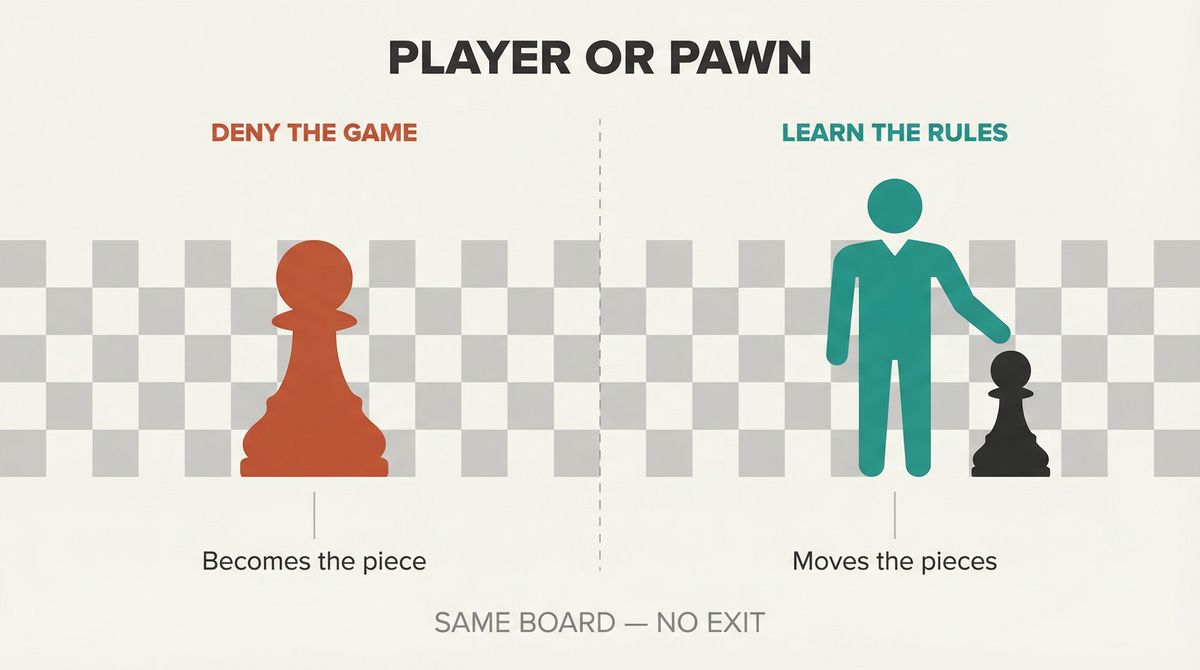
Critics rightly note that Greene assumes a largely zero-sum world. Not every interaction is a contest, and not every generous act conceals a blade. The framework works best not as a life philosophy but as a literacy course — teaching readers to decode situations the way a chess player reads a board. In an era of corporate politics, social media performance, and algorithmic influence, that literacy is arguably more relevant than when the book appeared in 1998.
The apparent contradictions between certain laws — 'Court Attention' versus 'Behave Like Others' — are not flaws but features. They reflect Greene's deeper thesis: context determines everything, and the truly powerful sense which principle each moment demands. The numbered format promises algorithmic certainty, but the actual message is its opposite: fluidity over formula, adaptability over dogma.