Robert Greene's The 48 Laws of Power holds a rare position in modern nonfiction
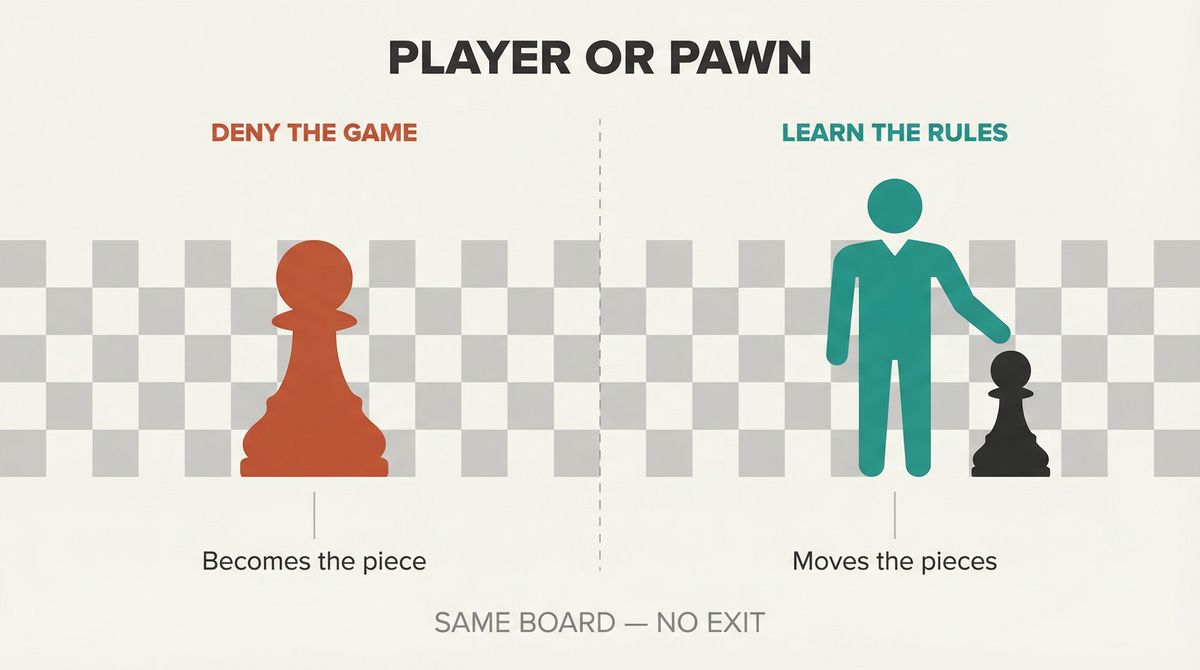
part history book, part strategy manual, part philosophical provocation. Drawing from three millennia of examples — Sun-tzu to Bismarck, Medici bankers to Mao's guerrillas — Greene distills what he sees as the unchanging mechanics of human power dynamics. The result is less a prescriptive playbook than a diagnostic toolkit for reading the hidden architecture beneath every social interaction.
What makes the book endure is its radical amorality. Unlike most self-help works, which start with ethics and work backward, Greene begins with raw observation. He asks not 'What should people do?' but 'What actually works?' This places him in the Machiavellian tradition, and like Machiavelli, he has been celebrated and condemned for articulating what most people practice in silence.
Greene's most subversive claim is his opening argument
that those who loudly reject power games are often the most skilled players. The person who advertises moral purity is deploying concealment; the radical egalitarian redistributes power on their own terms. This Nietzschean suspicion of virtue as a mask for will-to-power is the philosophical engine driving all 48 laws.
Critics rightly note that Greene assumes a largely zero-sum world. Not every interaction is a contest, and not every generous act conceals a blade. The framework works best not as a life philosophy but as a literacy course — teaching readers to decode situations the way a chess player reads a board. In an era of corporate politics, social media performance, and algorithmic influence, that literacy is arguably more relevant than when the book appeared in 1998.
The apparent contradictions between certain laws — 'Court Attention' versus 'Behave Like Others' — are not flaws but features. They reflect Greene's deeper thesis: context determines everything, and the truly powerful sense which principle each moment demands. The numbered format promises algorithmic certainty, but the actual message is its opposite: fluidity over formula, adaptability over dogma.