Freakonomics arrived in 2005 as a Trojan horse.
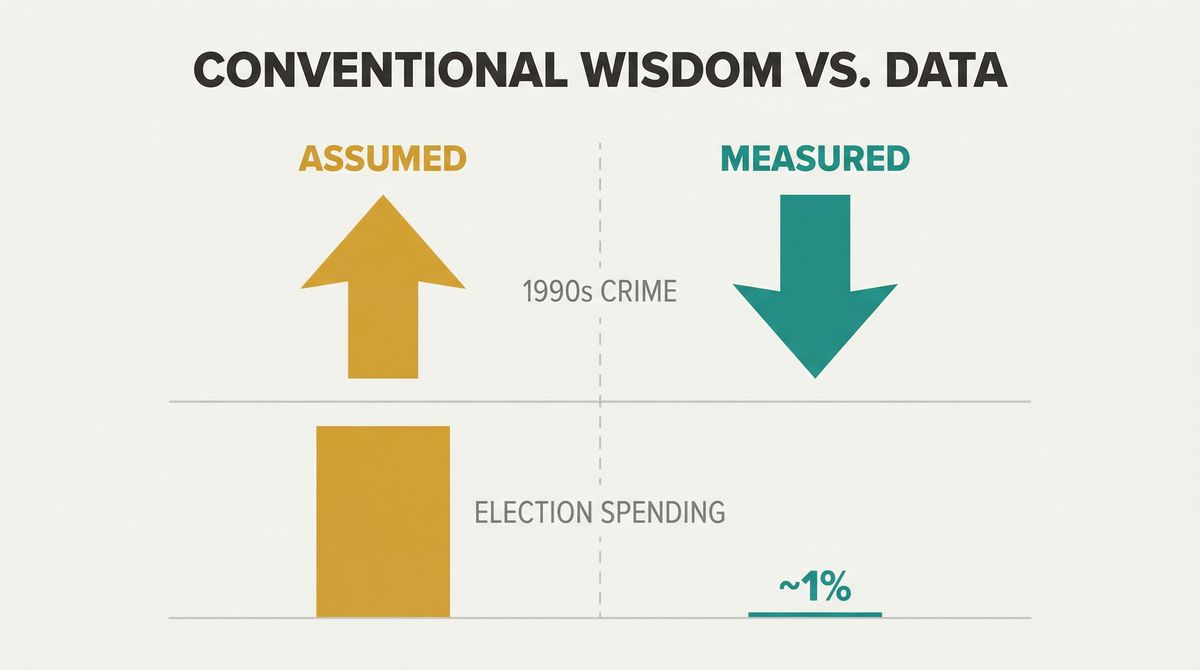
Packaged as pop entertainment — sumo scandals, crack dealers' budgets — it smuggled in a genuinely radical epistemological argument: that most expert knowledge about social phenomena is really conventional wisdom laundered through credentials and media repetition. The book's deepest contribution isn't any single finding; it's the demonstration that a handful of analytical principles — follow incentives, distinguish correlation from causation, exploit natural experiments — can overturn decades of received wisdom.
The book essentially invented a genre. Before Freakonomics, the idea that an economist might study sumo wrestling or baby names was considered trivial. Levitt's work helped legitimize an empirical, question-driven approach to social science that prioritized clever identification strategies over grand theory. This 'credibility revolution' in economics has since transformed the discipline, with natural experiments now considered the gold standard.
The book has aged unevenly.
The abortion-crime thesis remains hotly debated — subsequent scholars have both supported and challenged the findings, and the authors themselves had to correct an error identified by Foote and Goetz while arguing their corrected results still held. The real estate agent study anticipated the broader collapse of trust in expert intermediaries that platforms like Zillow would accelerate. The parenting chapter's emphasis on 'who you are' over 'what you do' presaged the behavioral genetics revolution that has only strengthened the case for genetic influence.
What's most striking in retrospect is the book's studied amorality — its insistence that economics describes how the world works without prescribing how it should. This gives intellectual freedom but sometimes reads as evasion. The abortion-crime chapter carefully avoids policy recommendations, leaving readers with a powerful statistical relationship and no guidance on what to do with it. That tension — between the power of data to reveal uncomfortable truths and the inadequacy of data alone to resolve moral questions — remains the book's most productive provocation.