Published in 1989 — the same year the Berlin Wall fell
The 7 Habits has sold over 25 million copies and remains the foundational architecture of the personal development genre. What accounts for its durability while hundreds of contemporaries have vanished?
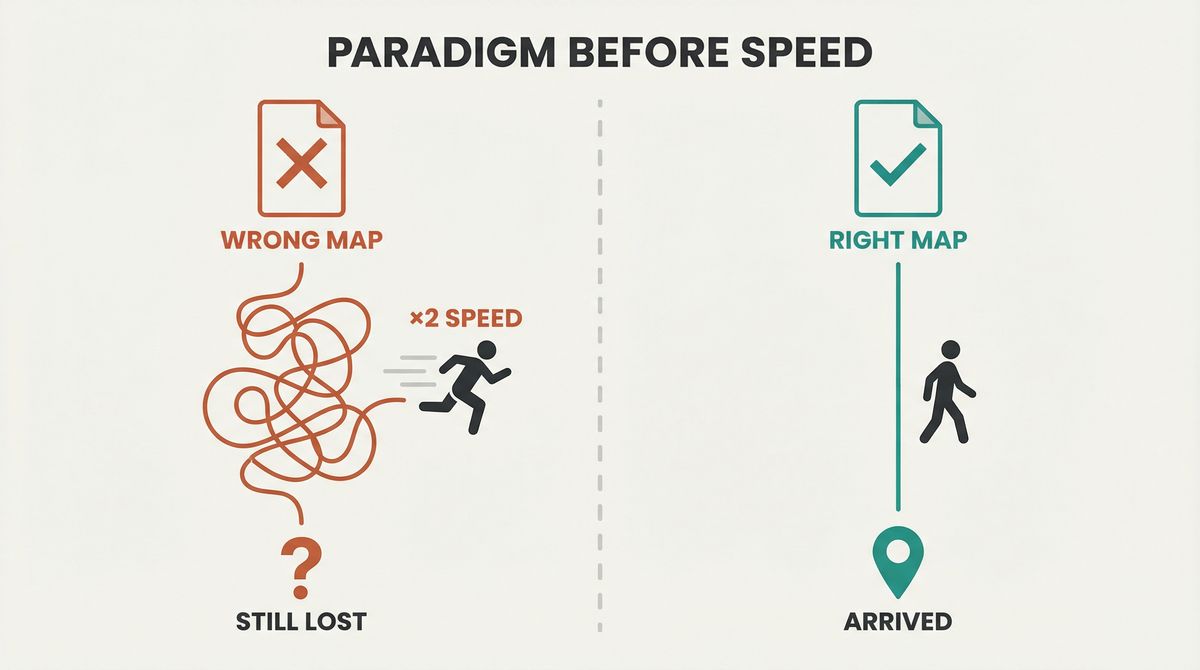
The answer lies in Covey's structural decision to operate at the paradigm level rather than the practice level. Where most self-help books offer actionable tips ('five ways to listen better'), Covey argues that tips are worthless unless the underlying character supports them. The Personality Ethic produces short-term social gains that collapse under pressure; the Character Ethic compounds. This distinction maps neatly onto modern research on psychological safety, intrinsic motivation, and trust — domains that barely existed as academic fields when Covey was writing.
The book's developmental sequence — dependence to independence to interdependence — mirrors what developmental psychologists from Piaget to Kegan have described. What remains radical is Covey's insistence that independence, the holy grail of American culture, is a waypoint, not a destination. This was counterintuitive in 1989 and arguably more so today, as the self-optimization movement often glorifies lone-wolf productivity over collaborative creation.
The framework's weakness is its idealism.
Covey's anecdotes resolve almost too neatly — the proactive executive always gains respect, the empathic listener always closes the deal. Power asymmetries, systemic injustice, and personality disorders receive no sustained attention. The book implicitly assumes that principled behavior is eventually rewarded, which is aspirational but incomplete as a model of how the world actually works.
Still, several contributions are genuinely durable. The P/PC Balance reframes every resource allocation decision in life. The Emotional Bank Account remains arguably the most useful metaphor for trust in popular psychology. And the Character Ethic versus Personality Ethic distinction has become more prescient with each passing year of social media, personal branding, and performative authenticity. Covey diagnosed the disease of superficial success before most people had the vocabulary for it.